Schopenhauer's Inverted Turing Test
What would Schopenhauer think of A.I.?

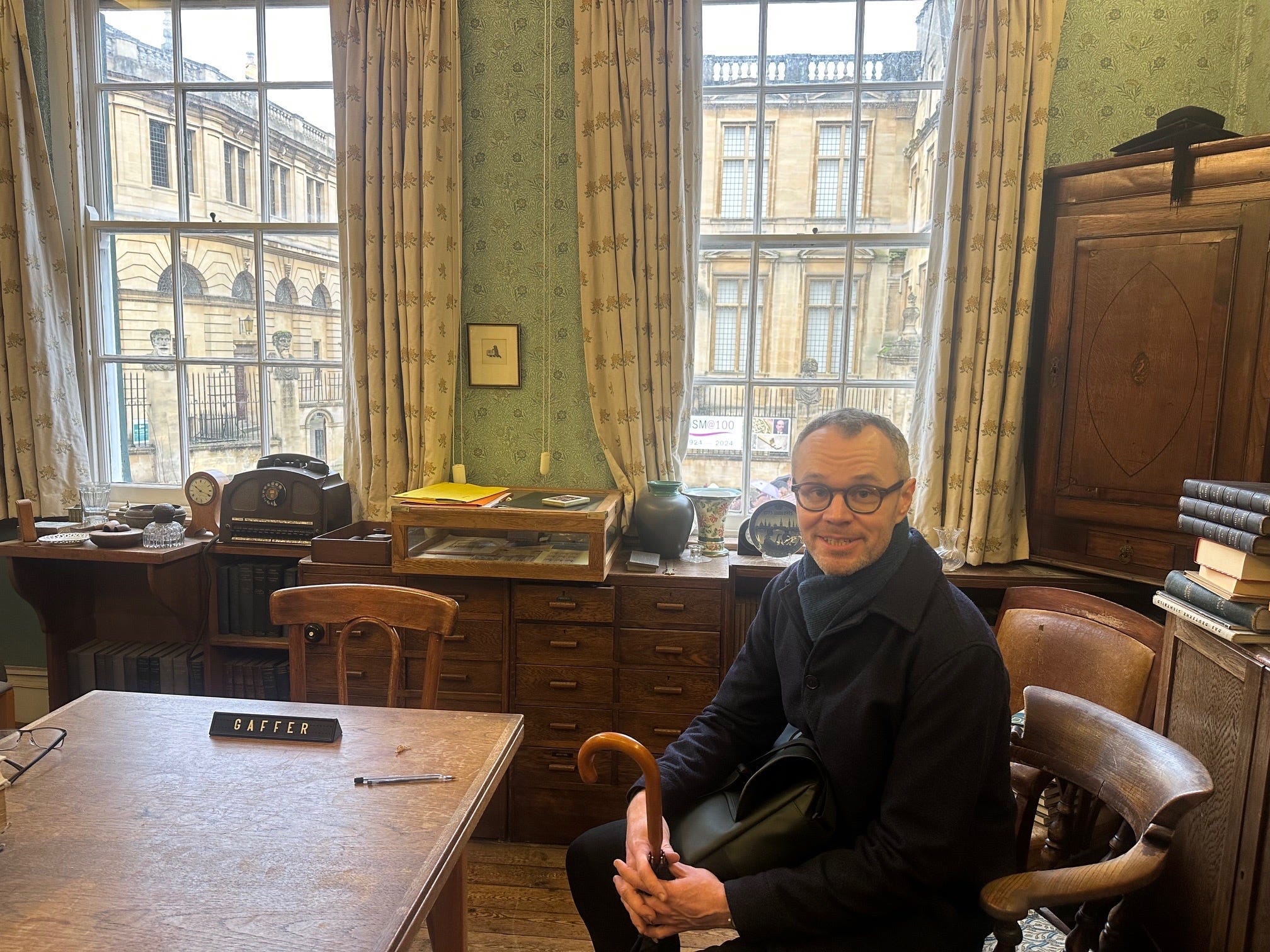
A highlight of promoting my recent book on Schopenhauer was the opportunity to appear in the Philosophy in the Bookshop series at Blackwell’s flagship branch in Oxford. Nothing feels more authorial than talking about your book in a bookshop, especially such an iconic one as Blackwell’s. I even got a private look behind the scenes in the immaculately preserved Gaffer’s Room.
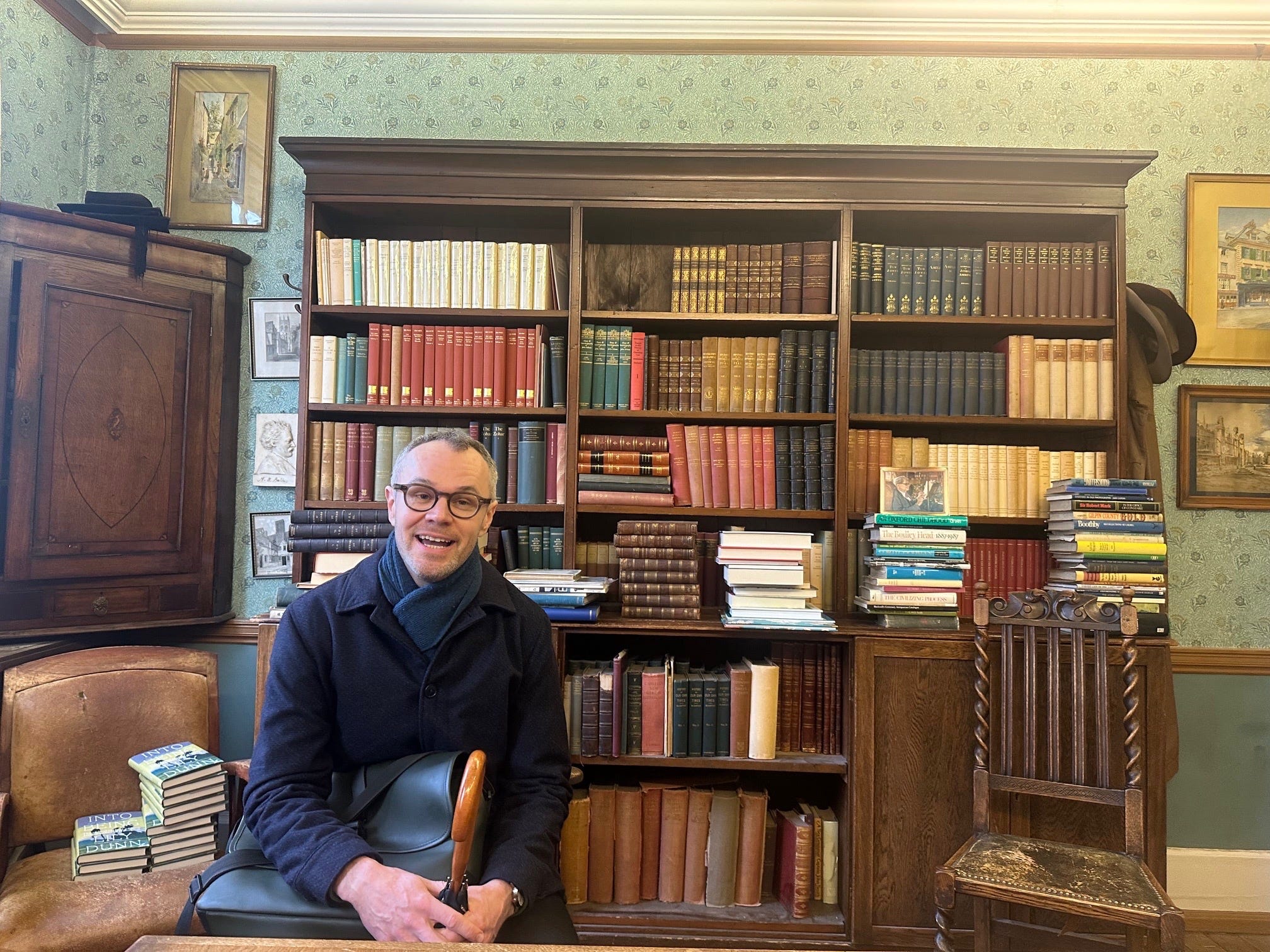
In the Q&A, the first question came from the author and philosopher Roman Krznaric, who spends a lot of his time thinking about the future. Earlier my interviewer Nigel Warburton had cued me up to talk about Schopenhauer’s strong interest in early portrait photography – Nigel himself having written about the philosophy of photography – and I’d mentioned that Schopenhauer was very scientifically literate and liked to keep up to date with technological advancements. It may be why (as I float in my book) Schopenhauer could possibly the first major philosopher ever to be photographed.
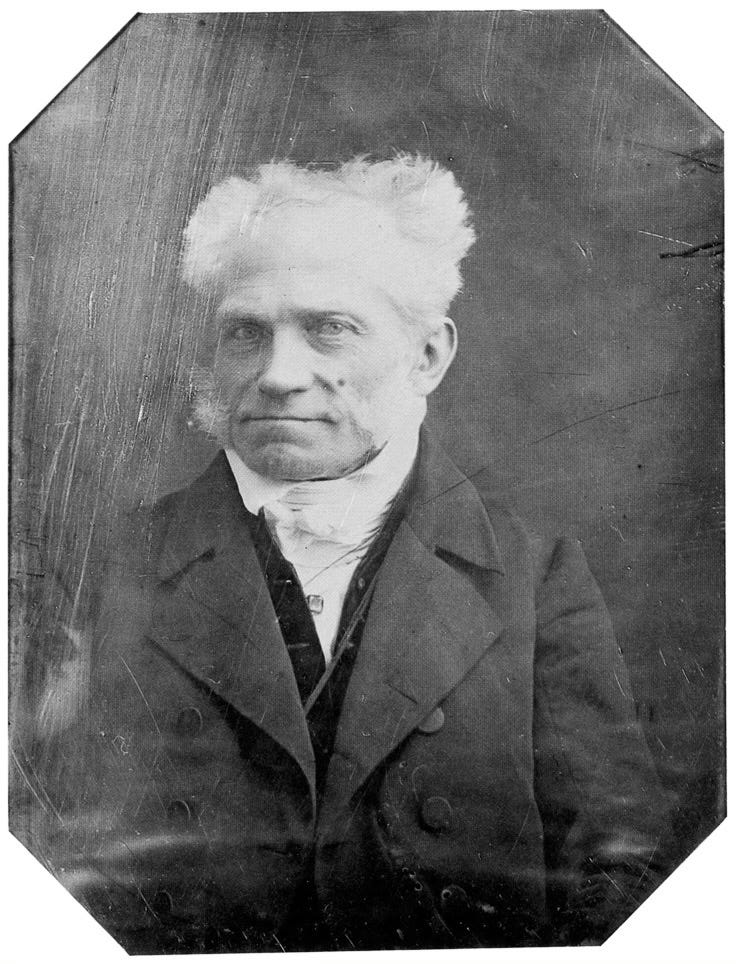
With concerns about A.I. seeming to hang in the air, naturally the first question came from that direction: What would Schopenhauer have thought of A.I.? Perhaps his enthusiasm for new technologies would extend from visual science to computer science…?
The truth is, he’d be horrified. The first chapter of my book is partly about Schopenhauer’s views on the value of thinking for yourself. For Schopenhauer, knowledge does not merely consist in having all the facts and figures at your fingertips. The acquisition, composition, and constitution of one’s personal body of knowledge is equally important, if not more so. Schopenhauer was sceptical enough about reading books as a source of second-hand knowledge. Reading books! This coming from one of most well read philosophers I can think of. Another way to put it is that genuine thinking was far more important to Schopenhauer than mere learning.
“Truth that is merely learned sticks to us like an artificial limb, a false tooth, a wax nose or at best one formed by rhinoplasty from another’s flesh; but what is acquired through one’s own thinking resembles the natural limb, and it alone truly belongs to us.” (Parerga and Paralipomena II §260)
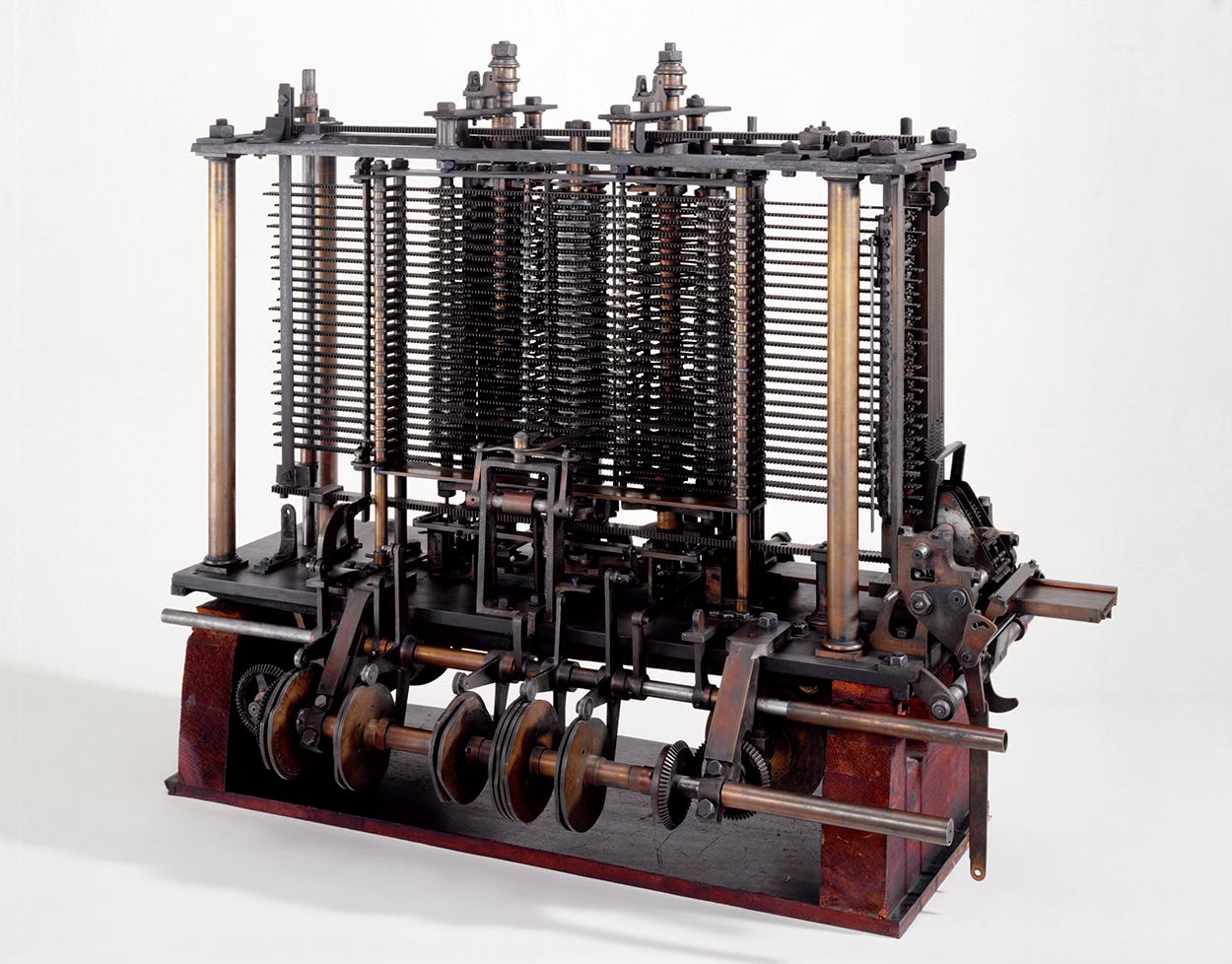
Initially I answered the question along these lines. But then I remembered that a closer parallel occurred in Schopenhauer’s own lifetime, and he was sceptical of that too. The English mathematician and inventor Charles Babbage (1791–1871) – like the French painter and pioneer of photography Louis Daguerre (1787–1851) – came from the same generation as Schopenhauer (1788–1860). Babbage famously invented the first mechanical calculators and computers (example pictured).
I can only guess that Schopenhauer had these machines in mind when he made the following remark:
“That the lowest of all mental activities is arithmetic is proven by the fact that it is the only one that can also be executed by a machine, just as now in England this kind of calculating machine is already in frequent use for the sake of convenience.” (Parerga and Paralipomena II §356)
According to Schopenhauer, the fact that arithmetic can be done by a machine says more about arithmetic’s ranking as a form of cognition than it does about human ingenuity.
Let me be clear. This remark tells us little about what Schopenhauer really thought of calculating machines as a technological feat. He was wowed by photographic technology, after all, which (in a way) imitates a basic mental activity too. No doubt Schopenhauer and Babbage would have had a lot to talk about, had they ever met. But there might have been some conflict too, as Schopenhauer’s real target was mathematics and mathematicians rather computer science. He goes on to quote Georg Christoph Lichtenberg (1742–1799) on the topic:
“The so-called professional mathematicians, relying on the immaturity of the rest of mankind, have acquired a reputation for profundity that closely resembles that of holiness, which the theologians claim for themselves.”
Today it’s harder to malign mathematicians for their willingness to exploit the naivety of the public by masquerading as profound and holy theologians. Instead that sort of description brings to mind the oracular pronouncements made by the prophets of A.I. about its awe-inspiring omniscience.
So Schopenhauer’s remark is more about the relationship between human and machine cognition than it is about the wonders (or not) of new technology. And it’s based on an interesting principle: If a machine can do it, then can’t be a high form of intelligence.
I think of this as a kind of inverted Turing test. In his seminal paper ‘Computing Machinery and Intelligence’ (1950), Alan Turing (1912–1954) gave a famous answer to the question “Can machines think?” Turing proposed that we should think of the question as a kind of test. In the test, a human interrogator must discern whether they are interrogating a person or a machine. If they cannot reliably do so, then there are grounds to say that the machine is capable of thinking.
Schopenhauer isn’t quite answering the same question – he is not asking “Can machines think?” – but he seems to be saying something like the reverse. If a machine can reliably and convincingly replicate a human mental activity, then it says more about the mental activity in question than the machine. In particular, it says that the mental activity cannot be the height of human intelligence.
This leaves us with a different unanswered question: So what is the height of human intelligence? All Schopenhauer tells us here is that, whatever it is, it’s not what a machine does. Still, the humanistic assumption behind this negative answer might reset how we approach the question of human intelligence after the advent of machine learning. The proposal is simultaneously modest and self-assured: We don’t know what we’ve got, but we know we’ve got it. The task is to find it.
David Bather Woods is an associate professor in the Department of Philosophy, University of Warwick. His book Arthur Schopenhauer: The Life and Thought of Philosophy’s Greatest Pessimist is published by the University of Chicago Press.